Media
How to Prepare for a Media Interview Without Sounding Rehearsed
The best preparation gives you clarity, not a script. Learn to shape key messages, choose useful stories, and handle difficult questions while staying present in the conversation.
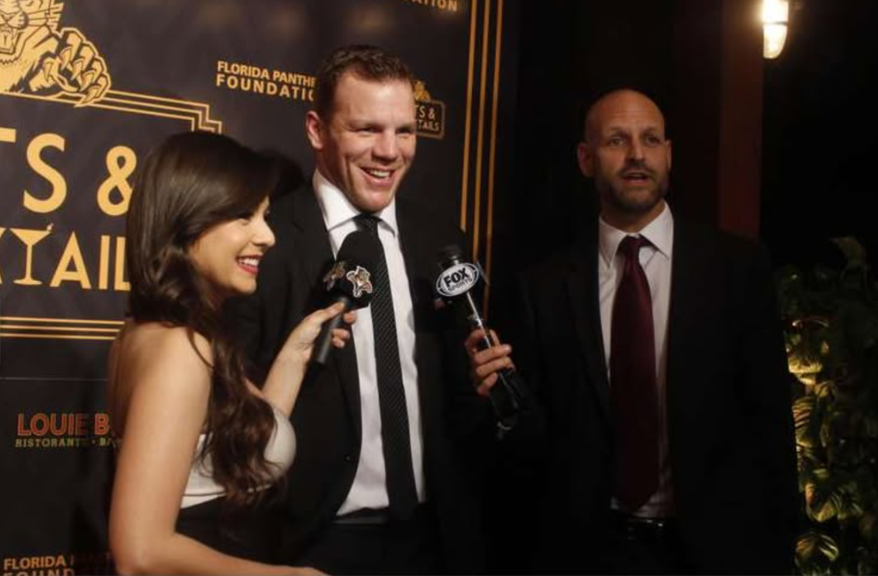
Sounding natural in a media interview does not mean arriving unprepared. It means preparing the substance well enough that you can respond to the conversation instead of trying to remember a performance.
A script can create a fragile kind of confidence. It works until the interviewer changes the wording, asks an unexpected follow-up, or challenges an assumption. Preparation built around ideas, examples, and boundaries is more adaptable. You know what you mean without needing to say it in exactly the same way every time.
The goal is not to control the interview. It is to contribute clearly, accurately, and usefully within a format you do not entirely control.
Understand the assignment before shaping the answer
Begin by clarifying the outlet, audience, topic, and interview format. Ask whether the conversation is live or recorded, how much time is available, and whether you are contributing to a larger reported piece or a standalone discussion.
Find out what prompted the request and which aspect of your expertise is relevant. You can ask about likely subject areas without assuming you will receive every question in advance. Review the interviewer's recent work to understand the level of detail and style of questioning.
Confirm practical arrangements and any organizational requirements. If the topic involves legal, regulatory, or confidential matters, seek appropriate guidance beforehand. Understand recording and attribution terms before speaking; do not assume an informal exchange is off the record or that you will be allowed to approve the finished piece.
Identify a small set of key messages
A key message is an idea the audience should understand, not a slogan you repeat regardless of the question. Choose a few points that directly address the interview's subject and your legitimate area of expertise.
Write each point in plain language. Then add the reasoning behind it, an appropriate example, and any necessary qualification. If you cannot explain the point without relying on jargon, keep working until the meaning is clear.
Prioritize what matters most. In a short interview, you may not cover every point. Ask yourself what would still make the conversation useful if only one idea reached the audience. That decision helps you respond with focus instead of trying to compress your entire professional perspective into every answer.
Prepare stories that illuminate rather than impress
A well-chosen story can make expertise tangible. It should help explain the issue, not merely establish that you have been near something important.
Prepare a brief account of the situation, the relevant tension, the action or decision, and the lesson. Include only details you can substantiate and are permitted to share. Protect confidential information and consider whether unnamed people could still be identified.
Do not manufacture a personal example because you expect storytelling to be persuasive. You can use a clearly labeled hypothetical scenario, describe a general process, or refer to a verifiable public example instead. The strongest illustration is the one that makes the answer clearer while remaining accurate and appropriate for the audience.
Build sound bites from complete thoughts
A useful sound bite is a concise expression of a substantive idea. It is not necessarily a clever line. Clarity often makes language more memorable than verbal decoration does.
Start with your full explanation and identify the sentence that carries its essential meaning. For example, a hypothetical communication expert might say, “Preparation should give you options, not a script.” That sentence becomes useful when the speaker can explain what it means and where it applies.
Test short statements outside their original context. Could the line exaggerate your position or omit an essential condition? Avoid absolute claims simply because they sound stronger. A memorable phrase should survive scrutiny, not depend on the surrounding conversation to rescue it from being misleading.
Practice answering, not reciting
Rehearse with questions in different wording and in an unpredictable order. Ask a colleague to interrupt, request clarification, or challenge a broad claim. The purpose is to strengthen your ability to think aloud, not to eliminate every pause.
Use a flexible structure: answer the question directly, explain the reasoning, and offer an example if useful. Then stop. Long answers can bury the point and leave less room for a productive follow-up.
Record a practice conversation if possible. Listen for unclear language, unnecessary throat-clearing, and places where you sound more certain than the evidence allows. Also notice whether you actually answered the question. Review for understanding rather than trying to remove every natural feature of your speech.
Prepare for difficult questions without learning evasions
List the questions you would least like to receive. These may concern a limitation, a disputed assumption, an organizational decision, or something outside your expertise. Prepare an honest response for each rather than hoping the subject will not arise.
If a question contains an inaccurate premise, correct it calmly before answering. If you do not know, say so. If information is confidential, explain the boundary as specifically as you appropriately can. Do not replace missing knowledge with speculation.
Bridging can help connect an answer to relevant context, but it should not become a way to ignore the question. Address what was asked first. Then explain the related point the audience needs. In a recorded interview, you can ask to clarify an answer, but do not assume an earlier statement will be removed.
Stay present in the conversation
Listening is part of media preparation. A question may sound familiar while asking something different from what you rehearsed. Give yourself a moment to understand it before moving toward your preferred response.
Ask for clarification when needed. Use ordinary language, speak at a pace that allows thought, and finish a sentence before adding another idea. A brief pause often sounds more composed than filling the space with an answer you have not considered.
For remote interviews, reduce avoidable distractions. Test your microphone and connection, choose a quiet environment, and place brief notes where you can glance at them without reading continuously. Notes should contain prompts and verified details, not paragraphs that compete with the conversation for your attention.
Close accurately and learn from the exchange
When there is an opportunity for a final thought, reinforce the most useful idea that remains unclear or unaddressed. Do not introduce a dramatic new claim that you cannot explain in the available time.
Afterward, note any factual point that may need clarification and communicate it promptly through the appropriate contact. You can offer accurate supporting material without assuming editorial control. Review the published interview to learn where your explanations were clear and where they could improve.
Natural communication is not the absence of preparation. It is the ability to remain responsive because the underlying thinking is secure. Prepare your ideas, verify your examples, understand your limits, and leave room to listen. That is how expertise becomes a conversation rather than a performance.